
VAWA Green Card Lawyer for Abuse Victims in Orlando
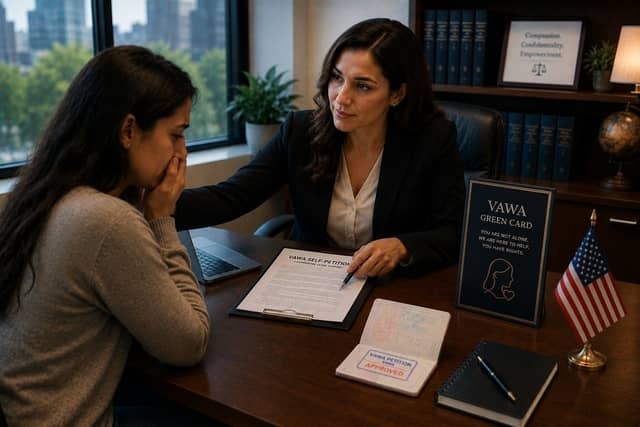
What Is VAWA and Who Does It Protect?
The Violence Against Women Act, commonly known as VAWA, is a federal law that allows certain immigrants who have experienced abuse to petition for immigration benefits independently, without the knowledge or cooperation of the abuser. Despite its name, VAWA protections apply to men, women, and children alike.
VAWA was created to prevent immigration status from being used as a tool of control. In some relationships, abusive spouses or family members threaten deportation or refuse to sponsor immigration applications in order to maintain power. VAWA allows eligible individuals to seek lawful status on their own.
Who Can File a VAWA Self-Petition?
To qualify, you must generally fall into one of these categories:
- A spouse abused by a U.S. citizen or lawful permanent resident
- A child abused by a U.S. citizen or lawful permanent resident parent
- A parent abused by a U.S. citizen child who is at least 21 years old
You must also show:
- That the relationship was entered into in good faith
- That you lived with the abuser at some point
- That you meet the good moral character requirement
The VAWA Self-Petition Process
The first step is filing Form I-360, Petition for Amerasian, Widow(er), or Special Immigrant. The petition is submitted directly to USCIS and does not require the abuser to participate in the process or even know that the application was filed. USCIS treats VAWA filings as strictly confidential.
If you are already inside the United States, you may be able to file Form I-485 to adjust status concurrently or once your I-360 is approved and an immigrant visa becomes available. This can allow you to obtain lawful permanent residence without leaving the country.
Applicants outside the United States may have different options available through consular processing, depending on their circumstances and immigration history.
One applicant came to our office after her spouse repeatedly threatened to withdraw her immigration paperwork whenever arguments occurred at home. She had never contacted law enforcement and did not have police reports, but she did have text messages showing threats related to her immigration status, along with statements from friends who witnessed the emotional abuse. USCIS accepts many forms of supporting evidence in VAWA cases, and situations like this are more common than many people realize.
What Evidence Do You Need?
One of the more difficult parts of a VAWA case is gathering supporting documentation. USCIS understands that many victims do not have police reports or medical records, so the agency accepts a wide range of evidence.
This may include:
- Personal statements describing the abuse
- Affidavits from friends, relatives, or witnesses
- Text messages, emails, or screenshots
- Photographs documenting injuries or property damage
- Police reports or restraining orders
- Medical, counseling, or shelter records
You may also need documentation showing:
- Your relationship to the abuser
- Shared residence
- Evidence of good moral character
Why Having the Right Legal Team Matters
A VAWA case involves more than completing immigration forms. The way the petition is organized, the evidence included, and the personal declaration presented can significantly affect the outcome. Even strong cases may face delays or denials if the application is incomplete or poorly documented.
At Symphorien-Saavedra Law, we understand that every VAWA case involves a deeply personal situation. Frank Symphorien-Saavedra, our founder, is Board Certified as an expert in Immigration and Nationality Law by the Florida Bar, and our attorneys have extensive experience handling VAWA petitions.
We help clients organize supporting evidence, prepare personal declarations, respond to USCIS requests, and file adjustment of status applications after petition approval.
Confidentiality Is a Priority
We understand that safety and privacy are major concerns in VAWA cases. Federal law prohibits USCIS from disclosing information about a VAWA petition to the abuser or unauthorized individuals. Our office also treats these cases with a high level of confidentiality and discretion.
Take the First Step
If you believe you may qualify for a green card through VAWA, speaking with an experienced immigration attorney can help you better understand your options and next steps.
Contact Symphorien-Saavedra Law at 407-802-1717 or fill out the contact form on our website to schedule a consultation.
Contact us
Symphorien-Saavedra Law, P.A. is a diverse team of immigrants who are dedicated to helping immigrants, small businesses, and investors.