
Fighting Naturalization Denials and Delays in Federal Court
You’ve spent years building a life in the United States, played by the rules, and finally submitted your naturalization application. Then, you hit a wall. Maybe USCIS denied your application despite your clean record and strong community ties. Or maybe you passed your interview months ago, and you are still sitting in limbo waiting for a decision.
You don’t just have to accept a wrongful denial or an endless delay. Federal immigration law actually gives you tools to challenge a bad decision or force a resolution in court.
The Roadblocks to Citizenship
Most people apply for naturalization under the standard five-year path (INA § 316) or the three-year path for spouses of U.S. citizens (INA § 319). Both routes seem straightforward on paper, but they require navigating some of the most unforgiving provisions in U.S. law.
USCIS scrutinizes everything. They dig into old tax returns, minor criminal infractions, child support records, travel history, and subjective assessments of "good moral character" that has been expanded recently. If an officer misinterprets the facts of your life or misapplies the law, your application gets denied.
Challenging a Denial
- Step One: The N-336 Hearing
If you receive a denial notice, your first line of defense is usually filing an N-336 Request for a Hearing. Think of this as an internal appeal that should be assigned to different officer. You are asking USCIS to take a second look, and the law says they are supposed to give you a fresh unbiased take we call de novo review.
Although the officer has some discretion, you can often bring in new evidence and clear up misunderstandings—like a trip abroad that looked like an abandonment of residency but wasn't, or a past legal issue the officer weighed improperly. You generally have to exhaust this administrative step before a judge will hear your case.
- Step two: Taking It to a Judge (8 U.S.C. § 1421(c))
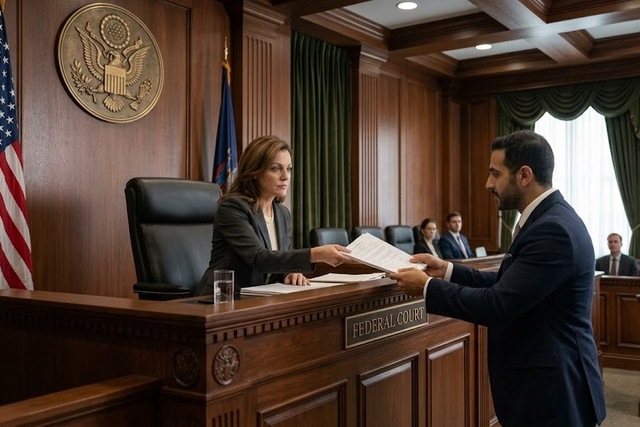
If USCIS still says no after the N-336 hearing, you can escalate the matter by filing a lawsuit in federal district court.
This is where the playing field levels out. Under 8 U.S.C. § 1421(c), the federal judge also does a de novo review. They aren't just rubber-stamping the agency’s decision; they are looking at the facts and the law fresh. If the USCIS officer ignored your evidence or applied the wrong legal standard, a federal judge has the power to overturn them and grant your citizenship.
When USCIS Just Won’t Make a Decision
Sometimes the issue isn't a denial—it’s silence. If you had your naturalization interview and 120 days have passed with no final answer, you don't have to keep calling the customer service line to no avail. Under 8 U.S.C. § 1447(b), you can file a lawsuit asking a federal judge to either decide your naturalization application themselves or order USCIS to make a decision immediately.
If your delay is happening before the interview—meaning your application has been gathering dust for an unreasonable amount of time—the legal mechanism is different. We typically use a petition for a writ of mandamus or an Administrative Procedure Act (APA) claim to remedy any unreasonable delay. The goal, however, is exactly the same: force the government to do its job and adjudicate your file.
Strategy and Deadlines Matter
Filing a federal lawsuit isn't a silver bullet for every case. Sometimes, gathering stronger evidence and simply refiling a new N-400 makes more sense than spending months in court.
When court is the right option, timing is everything. If you miss the window to file your N-336, or wait too long after a final denial to go to federal court, you lose your right to appeal. Conversely, if you sue for a delay on day 119 instead of day 121, your case will get thrown out on a technicality.
Navigating federal litigation against the U.S. government is not a DIY project. If you are trapped in the naturalization backlog or holding an unfair denial notice, reach out to Symphorien-Saavedra Law, P.A. Our attorneys, including our Board Certified founder, Francisco Symphorien-Saavedra, actively handle federal litigation. We can review your file, pinpoint exactly where the system broke down, and determine the best strategy to get your citizenship back on track.
Contact us today for a consultation!
This information is provided for general purposes and is not a substitute for individualized advice. You should schedule a consultation to discuss your specific situation. Call us today at 407-802-1717, or fill out the online form provided on this page and we will contact you shortly.
Contact us


Symphorien-Saavedra Law, P.A. is a diverse team of immigrants who are dedicated to helping immigrants, small businesses, and investors.