
Common Reasons for EB-2 NIW Denials in 2026
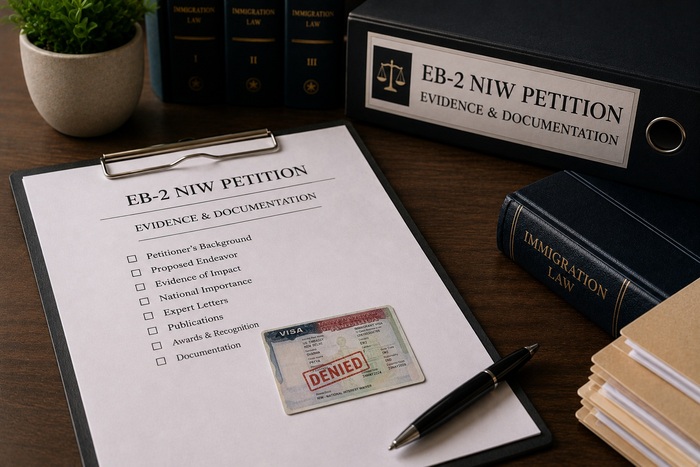

USCIS has increased scrutiny of EB-2 NIW petitions over the past two years, and the numbers show it. Approval rates dropped sharply in late 2025 before recovering somewhat in early 2026, and Requests for Evidence have become far more common than before. None of this means the EB-2 NIW is out of reach. It means the margin for mistakes in how a petition is built has gotten smaller.
Most denials trace back to a handful of issues. Here's what tends to trip petitions up and what applicants can do to address them.
A Vague or Broadly Proposed Endeavor
USCIS wants to see exactly what an applicant plans to do, not a general description of their field. When the proposed endeavor could describe almost any credentialed professional in that industry, the officer has no real basis to evaluate why this particular applicant's work deserves a waiver.
Weak Evidence of National Importance
Substantial merit is generally the easier factor to establish. National importance can be harder to establish. It's not enough to explain that a field matters in general terms. The petition needs to connect the applicant's specific work to a tangible national benefit, whether that's public health, economic growth, national security, or technological progress, and back that connection with real data and third-party sources.
Insufficient Proof of Being Well Positioned
Even a valid endeavor statement falls flat without proof the applicant can actually carry it out. USCIS looks for a track record, a concrete plan, and evidence of progress already underway. Academic credentials can be important, but they may not be enough on their own. The petition should also show why the applicant is prepared to advance the proposed endeavor and provide evidence of relevant accomplishments, progress, resources, or a credible plan for moving forward. Evidence from actual interested parties or potential customers is also very important to validate the strength of your position as recognized by others who understand or are in the field.
Generic or Unsupported Expert Letters
Recommendation letters are supposed to add credibility, but boilerplate praise rarely helps. Letters that don't explain how the writer knows the applicant's work, or that read like a template swapped with a new name, carry little weight. The strongest letters come from experts who speak specifically to the applicant's proposed endeavor, past contributions and why they matter.
Inconsistent Documentation
USCIS officers may compare information across the petition, supporting evidence, and prior filings. Small contradictions, an inconsistent job title, a mismatched timeline, or a claim in one document that isn't backed up elsewhere can raise questions that didn't need to exist. Every part of the petition should tell the same story.
An RFE Is Not the Same as a Denial
Although not all Requests for Evidence (RFE) are the same, receiving a narrow RFE does not mean USCIS has denied the petition. A narrowly tailed RFE gives the petitioner an opportunity to respond to specific concerns or provide additional evidence before USCIS makes a final decision. The response should address each issue raised by USCIS directly rather than simply submitting more documents without explaining how they resolve the concerns.
What to Do If Your Petition Was Denied
A denial isn't necessarily the end of the road, but the right response depends on why USCIS denied the petition and what your current status is. In some cases, a motion to reopen or reconsider may be appropriate. In others, filing a new petition with a substantially stronger case may make more sense. To assess the best approach, you should work with an experienced attorney to:
- Read the denial notice carefully to understand USCIS's specific reasoning.
- Compare the denial against your original petition, evidence, and any RFE response.
- Determine whether the issue was a legal disagreement or a gap in evidence.
- Check filing deadlines immediately. In most cases, an eligible appeal or motion using Form I-290B must be filed within 30 calendar days of the date of service of the decision, or 33 days if USCIS mailed the decision.
- Decide whether a motion to reopen, a motion to reconsider, or a new petition makes more sense for your situation.
- Asses your present legal status and review the age of any dependents.
Every case is different, and the right path forward depends on the specific facts involved. If your EB-2 NIW petition was denied, we can review your case and help you figure out the strongest way forward.
Contact Our EB-2 NIW Attorneys Today
Whether you're preparing a petition for the first time or responding to a denial, the details matter. A well-built case connects a clearly defined endeavor to real evidence of national importance, a credible plan to carry it out, and documentation that holds together from start to finish.
At Symphorien-Saavedra Law, we've guided many professionals through the EB-2 NIW process. Frank Symphorien-Saavedra, our founder, is Board Certified as an expert in Immigration and Nationality Law by the Florida Bar.
Call us today at 407-802-1717 or fill out the form on this page, and we'll be in touch to set up a consultation.